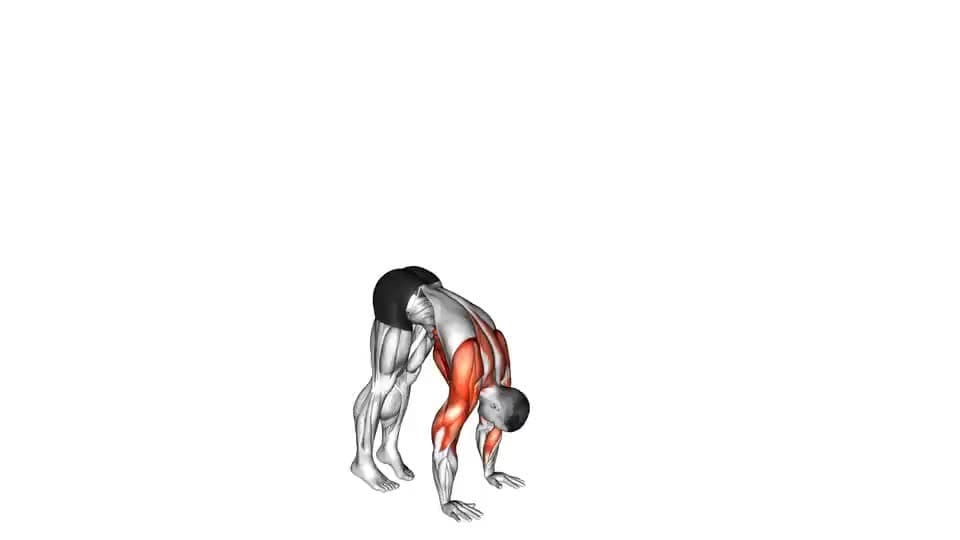
Handstand
Exercise Profile
Related Exercises:





Get the exercise library in your pocket!
Introduction to the Handstand
The Handstand is a full-body exercise that enhances upper body strength, improves balance, and boosts core stability. It is ideal for athletes, gymnasts, and fitness enthusiasts seeking to challenge their body in a different and fun way. People engage in this exercise to develop muscular endurance, flexibility, and to add an advanced move to their fitness regime.
Performing the: A Step-by-Step Tutorial Handstand
- Find a clear, open space against a wall where you can safely practice your handstand, then kneel down and place your hands flat on the floor about shoulder-width apart, fingers spread wide for stability.
- Kick up one foot at a time, using the wall for support, until both of your feet are above your head and your body is in a straight line from your hands to your feet.
- Engage your core and push down through your hands to keep your body steady, remember to keep your gaze on the floor between your hands, not at the wall.
- To come out of the handstand, slowly lower one foot at a time back to the floor, then rest and repeat the exercise as desired.
Tips for Performing Handstand
- **Start Against a Wall:** One common mistake is trying to do a freestanding handstand without mastering the basic form against a wall. Start by facing away from the wall, placing your hands on the ground, and slowly walking your feet up the wall until your body is in a straight line. This allows you to focus on your form and build the necessary strength and balance.
- **Hand Positioning:** Place your hands shoulder-width apart with fingers spread wide. This helps distribute your weight evenly across your hands and provides a solid base of support. A common mistake is to clump your fingers together, which can lead to instability.
- **Engage Your Core:** Your core is essential
Handstand FAQs
Can beginners do the Handstand?
Yes, beginners can certainly start learning how to do a handstand exercise. However, it's important to note that handstands are advanced exercises that require strength, balance, and proper technique. Beginners should start slowly, perhaps by using a wall for support, and gradually work their way up to a full handstand. It's also advisable to have a trainer or spotter for safety reasons when first attempting this exercise. Always prioritize safety and listen to your body to avoid injuries.
What are common variations of the Handstand?
- The Straddle Handstand: In this variation, the legs are spread apart in a straddle position while maintaining the handstand.
- The One-Handed Handstand: This advanced variation involves balancing the entire body on just one hand.
- The Handstand Walk: This variation involves moving or "walking" on the hands while maintaining the handstand position.
- The Pike Handstand: In this variation, the body is bent at the hips, forming a 90-degree angle, while the legs remain straight and together.
What are good complementing exercises for the Handstand?
- Push-ups are beneficial because they improve upper body strength, particularly in the shoulders and arms, which is necessary for holding up your body weight in a handstand.
- Hollow body holds are also related to handstands as they improve body tension and awareness, which are crucial for maintaining a straight line from head to toe during a handstand.
Related keywords for Handstand
- Bodyweight handstand exercise
- Triceps workout with handstand
- Upper arm strengthening handstand
- Handstand for arm muscles
- Bodyweight exercise for triceps
- Handstand training for upper arms
- Handstand workout
- Handstand push-ups for triceps
- Upper body workout with handstand
- Handstand exercise for arm strength.
Do Handstand in the Lyfta app
Save this exercise, log your sets, and follow full workouts — free on iOS and Android.